Agenda and minutes
 PDF 36 KB
Venue: Lavery Room - City Hall
Contact: Louise McLornan, Committee Services Officer
Media
| No. | Item | ||||||
|---|---|---|---|---|---|---|---|
|
Apologies Additional documents: Minutes: An apology for inability to attend was reported from Councillor Bell.
|
|||||||
|
Minutes Additional documents: Minutes: The minutes of the meeting of 11th December 2025 were taken as read and signed as correct. It was reported that those minutes had been adopted by the Council at its meeting on 8th January.
|
|||||||
|
Declarations of Interest Additional documents: Minutes: Councillor T. Brooks declared an interest in Item 2a, UPSURGE EU Horizon Project Update, in that she was employed by Queen’s University Belfast, but she advised that she did not feel it was necessary to leave the room for the item.
|
|||||||
|
Restricted Items Additional documents: Minutes: The information contained in the reports associated with the following item is restricted in accordance with Part 1 of Schedule 6 of the Local Government Act (Northern Ireland) 2014.
Resolved – That the Committee agrees to exclude the members of the press and public from the meeting during discussion of the following item as, due to the nature of the items, there would be a disclosure of exempt information as described in Section 42(4) and Schedule 6 of the Local Government Act (Northern Ireland) 2014.
The Members were advised that content of ‘restricted’ reports and any discussion which takes place during closed session must be treated as ‘confidential information’ and no such information should be disclosed to the public as per Paragraph 4.15 of the Code of Conduct.
|
|||||||
|
UPSURGE EU Horizon Project Update Minutes: The Adaptation and Resilience Advisor provided the Committee with an update on the development of a scientific and environmental demonstrator site in Lower Botanic Gardens, following the successful award of funding from the Horizon 2020 EU ‘UPSURGE’ Project. The project focused on testing nature-based solutions in 5 demonstrator cities across Europe, with the aim of sharing learning and good practice on pollution alleviation, citizen health and climate resilience.
During discussion, a Member requested that the 24 partner organisations be shared with the Members.
After discussion, the Committee noted:
i. that the £0.73 million UPSURGE project had been testing nature-based solutions (NBS) with the aim of renaturing urban space in five demonstrator cities across Europe (Belfast, Breda, Budapest, Katowice and Maribor); ii. the project specifically supported the CPP’s ambition to become a nature positive city under the Belfast Agenda and was a key priority in the Corporate Annual Delivery Plan and the Performance Improvement Plan; iii. a demonstrator site established at Lower Botanic Gardens in partnership with Queens University, Friends of the Field and Friends of Botanic had been testing nature-based solutions; iv. four satellite sites (Waterworks, Musgrave Park, Belvoir Community Garden and Knocknagoney Community Garden) had been selected alongside the main demonstrator site, to replicate best practice across the city with capital works to be completed by the end of February 2026; v. a Place Lab Action Plan had been developed with partners and engagement had taken place with citizens on five key themes related to nature-based solutions: Eco-sensitisation, Social Benefits, gender based NBS, Economic Opportunities, and Political Capital; vi. innovative sensor-based technologies had been used to track the impact of the nature-based solutions on environmental parameters such as soil and air quality; vii. officers planned to review the next steps and lessons learned from the demonstrator project and would develop a costed plan for the ongoing monitoring, maintenance and sharing of the learning in line with the grant funding agreement. Consideration would also be given to future learning for the Council’s policy frameworks and the choice of suitable locations for demonstrator projects of that type.
|
|||||||
|
Carbon Disclosure Project 2025 Results Additional documents: Minutes: The Monitoring, Learning and Reporting Officer explained that Belfast had actively participated in the Carbon Disclosure Project (CDP) since its first annual submission in July 2021. She explained that the CDP was a global non-profit organisation which operated an independent environmental disclosure system, encouraging cities to manage their environmental impacts and enhance transparency. She outlined that Belfast's submissions had focused on key themes such as waste, transport, energy, emissions, climate risk, adaptation, and mitigation. The city had consistently demonstrated its commitment to environmental transparency by making its submissions public each year. Starting with a B ranking in 2021, Belfast had achieved an A ranking in 2022, which it had gone onto maintain through 2025. She highlighted that the recognition placed Belfast among the top cities globally for bold leadership in climate action and transparency.
The Members were advised that Belfast's high rankings in the CDP were attributed to its ambitious sustainability initiatives and projects. Those included the Belfast Net Zero Carbon Roadmap, UPSURGE, the Belfast Tidal Defence Project, the Retrofit Hub, and the Local Development Plan. She added that recent efforts, such as the Climate Action Plan, Local Area Energy Plan, UP2030 Net Zero Neighbourhoods, Solar PV installations, and the establishment of the Belfast Sustainable Food Partnership, had further solidified its position in the Leadership band.
The Committee noted the 2025 CDP award of A- status to Belfast and agreed its support for the annual submission by Belfast through the internationally recognised carbon and climate reporting framework.
|
|||||||
|
Public Body Reporting - Mitigation Report Additional documents: Minutes: The Monitoring, Learning and Reporting Officer presented the following report to the Committee:
“1.0 Purpose of Report or Summary of Main Issues
1.1 To share the information that was submitted to the Department of Agriculture, Environment and Rural Affairs (DAERA) in relation to the Mitigation Report required under the Climate Change Act, Public Body Reporting on the 31st October 2025.
2.0 Recommendations
2.1 The Committee is asked to note that:
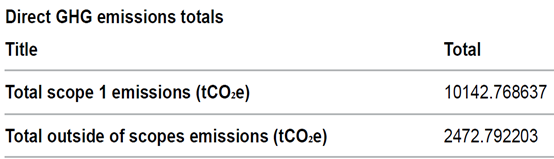
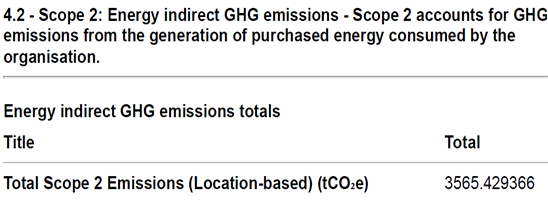
i. BCC is required to submit mitigation report to DAERA as part of the public body reporting requirements under the Climate Change Act (Northern Ireland) 2022; ii. the mitigation report including the amounts and sources of the council's greenhouse gas emissions and a statement of the council’s proposals and policies for reducing those amounts was submitted on the DAERA platform on 31st October 2025 for the baseline year of data (2023/2024); iii. the council's Scope 1 and 2 emissions for 2023/2024 were 101,42.8 tCO2e and 3565.4 tCO2e respectively; iv. the council’s proposals and policies for reducing greenhouse gas emissions include the 13 short-term actions within the Climate Action Plan (CAP) that relate to mitigation along with a progress update for each action; and v. although the next mitigation report to DAERA is not due until 2029, mitigation reporting will be repeated internally on an annual basis to enable Council to track its emissions and its progress for reducing these emissions.
3.0 Main report
3.1 Section 42 of the Climate Change Act (Northern Ireland) 2022 requires DAERA to make new Regulations, which will place climate change reporting duties on specified public bodies. The regulations came into operation in early May 2024, 21 days after they are laid in the Assembly. The first report required under the regulations, is the mitigation report which was submitted on 31st October 2025.
What was submitted?
3.2 As this was the first report, the baseline year of data (2023/2024) of the amounts and sources of the council's greenhouse gas emissions were calculated and uploaded. In future reports the 3 most recent financial years will be required.
3.3 The report also included a statement of the council’s proposals and policies for reducing those amounts and otherwise for mitigating the effects of climate change in the exercise of its functions. On this occasion, this included the short-term actions within the Climate Action Plan (CAP) that relate to mitigation. Updates were included on each of the actions, tracking their target for delivery.
Greenhouse gas figures
3.4 Estimates created inhouse matched those created using the DAERA portal and are listed below.
Scope 1
Scope 2
Proposals and policies for reduction
3.5 The short-term mitigation actions were submitted to DAERA as our proposals and policies for carbon reduction. The short-term mitigation actions are listed below.
1. Develop and launch an accessible climate data platform to track progress on delivering climate adaptation and mitigation actions (1.7) 2. Develop a sustainable/ low carbon procurement policy and supplier guidance documents to support a transition to an inclusive, net zero ... view the full minutes text for item 4. |
|||||||
|
Update on Public Body Reporting - Proposed Contents for Adaptation Report Additional documents: Minutes: The Monitoring, Learning and Reporting Officer presented the following report to the Committee:
“1.0 Purpose of Report or Summary of Main Issues
1.1 To inform Members of the requirements for the Council’s Climate Adaptation Report that must be submitted to DAERA by 31st March 2026.
2.0 Recommendations
2.1 The Committee is asked to note:
i. that the Council is required to submit an adaptation report 31st March 2026 covering a 4 year period from 1st Jan 2026; ii. that the contents of the report must outline the current and predicted climate change impacts in relation to the Council’s functions i.e. a climate change impact assessment along with the Council’s adaptation targets and priority actions; iii. that the priority actions must based on the Northern Ireland Climate Change Adaptation Programmes 2 and 3, the Council’s Climate Action Plan (CAP) and any additional adaptation work taking place across Council; iv. the three CAP actions to be included in the report:
· update the BCC Climate Risk Assessment in line with the new mandatory Public Body Reporting requirements (under the Climate Change Act); · apply SUDs policy and guidance (SUDS Manual C753) as standard practice in the Capital Programme; · start to deliver the Tree Establishment Strategy and continue the One Million Trees Programme;
v. the adaptation report submitted to DAERA will be brought back to a future Committee.
3.0 Main report
3.1 In June 2024, Members were informed of the Public Body Reporting Requirements under the NI Climate Act 2022. Section 42 of the Climate Change Act (Northern Ireland) 2022 requires DAERA to make new Regulations, which will place climate change reporting duties on specified public bodies. The regulations came into operation in early May 2024, 21 days after they are laid in the Assembly. The first report required under the regulations, is the mitigation report which was submitted to DAERA in October 2025. The Council must now produce and submit an adaptation report for submission by 31st March 2026.
What will be required?
3.2 The first adaptation report must relate to the period of 4 years beginning with 1st January 2026 and include:
· an assessment of the current and predicted impact of climate change in relation to the organisation’s functions; and · the proposals and policies for adapting to climate change in the exercise of its functions, along with implementation timescales.
3.3 The second and subsequent reports are required every 5 years and will include an assessment of the progress the body has made towards implementing the proposals and policies set out in any previous climate change adaptation reports.
3.4 The adaptation report includes information under six headings.
§ Part 1: Profile – information about the organisation. § Part 2: Governance – what governance structures exist in Council to manage adaptation, strategies and plans that integrate adaptation planning and what objectives relate to it. § Part 3 – Impacts: the Council’s climate risk assessment including the methodology and findings. § Part 4 – Actions: the Council’s adaptation targets and priority actions and how this ... view the full minutes text for item 5. |
|||||||
|
Funding Update: Pathways2Resilience Project Additional documents: Minutes: The Adaptation and Resilience Advisor provided the Committee with an update on Belfast's successful inclusion in the Horizon Pathways2Resilience Programme, a five-year initiative funded by the European Union’s Horizon Europe research and innovation programme. She outlined that the programme aimed to support at least 100 regions and communities across Europe in developing climate resilience strategies, adaptation pathways, and investment plans.
The Members were advised that Belfast had secured €198,612 in funding from Climate KIC, along with a capacity-building program to design and implement a transformative climate adaptation and resilience plan. The project, running from January 2026 to June 2027, would focus on creating a Climate Resilience Baseline report, Strategy, Action Plan, and Investment Plan. The funding would also support the recruitment of temporary project staff to enhance the capacity of Belfast City Council (BCC) and Northern Ireland Environment Link (Climate NI) in delivering resilience and adaptation initiatives. She highlighted the pressing need for climate adaptation in Belfast due to the city's vulnerability to climate risks such as rising sea levels, surface water flooding and extreme weather events. Climate projections had indicated significant changes, including hotter summers, wetter winters, and increased storminess, which posed challenges to the city’s infrastructure and residents. The Members were advised that the Pathways2Resilience programme would strengthen existing research and efforts on climate resilience, support annual climate adaptation reporting to the Council and contribute to the Belfast Agenda 2024-2028 and ongoing environmental initiatives. By participating in the programme, Belfast aimed to develop ambitious and impactful strategies to address climate challenges and ensure long-term sustainability.
In response to a Member’s query, she outlined that she would continue to bring updates to the Committee in respect of any other cities in the UK or Ireland which were also participating in the programme.
After discussion, the Committee noted:
i. that funding of €198,612 had been secured from Climate KIC which was part of the EU Horizon Pathways2Resilience Programme to engage with the capacity development programme and develop a Climate Resilience Baseline report, a Climate Resilience Strategy, a Climate Resilience Action Plan, and a Climate Resilience Investment Plan; ii. the project started in January 2026 and would end in June 2027; iii. that BCC would enter into an agreement with Northern Ireland Environment Link (Climate NI) to work in partnership to deliver the project.
|